When Are Fresh (Rutab) Dates in Season?
One of the most practical questions a fresh-date lover asks is simply: when can I buy them? Unlike dried tamr, which is available all year, naturally fresh rutab follows a harvest season. As a rule of thumb, fresh dates peak when the Northern Hemisphere date harvest comes in, roughly late summer to autumn. For buyers in Indonesia, that means the import window of about August to October, with demand rising again before Ramadan.
This page is a buyer's guide for fresh dates in Indonesia. For the full per-origin agronomic calendar, see our detailed article on date harvest season and the fresh-date availability calendar; here we focus on what it means for you at the point of purchase.
Fresh vs Frozen: Why You Can Buy Rutab Year-Round
Here is the good news: you do not have to wait for harvest to enjoy rutab. Because fresh dates are high in moisture and perishable, importers freeze them at very low temperatures, commonly around -18 degrees Celsius, which suspends spoilage and locks in texture. Frozen rutab is then thawed slowly before sale or delivery. So the market effectively splits in two: fresh non-frozen rutab in season, and frozen rutab thawed to order all year.
| Source | Fresh (Non-Frozen) Window | Frozen Availability |
|---|---|---|
| Gulf / Arabian dates | About August to October | Year-round |
| Iranian dates (e.g. Mazafati/Bam) | About September to October | Year-round |
| Local Indonesian dates | About July to September | Limited |
What to Look For When Buying Fresh Dates
Fresh rutab is wonderful but delicate. Because it holds roughly 35 to 40 percent water and 45 to 48 percent sugars, it is naturally prone to yeast and mold if mishandled, a point documented in food-microbiology studies of market rutab. Use these checks.
- Smell — it should smell sweet and clean, never sour, alcoholic, or fermented.
- Cold storage — buy from a seller who keeps rutab chilled or frozen, not warm on an open shelf.
- Surface — avoid dates that are sticky-slimy beyond natural moisture, bubbling, or visibly moldy.
- Texture — good rutab is soft and yielding, not dried out at the edges.
Sourcing Fresh Dates in Jakarta and Jabodetabek
For expats, embassies, and HoReCa buyers, English-language sourcing of fresh dates in Jakarta is thin, which is exactly the gap we fill. Popular choices include our Rotab Bam (Mazafati) for the wettest, darkest rutab, Medjool Palestine for large caramel fruit eaten at a soft ripeness, and Sukkary for a golden, very sweet date sold both wet and dry. Everything is halal and priced in IDR, with delivery across Jabodetabek. To check seasonal stock or place a pre-order for the fresh window, reach our team on WhatsApp. We keep the sell soft: the goal of this page is to help you buy fresh dates with confidence.
Storing Fresh Dates After You Buy
Once home, treat rutab like fresh produce. Keep it airtight in the refrigerator for a few weeks, or freeze it for longer and thaw slowly in the chiller to restore that melting texture. Leaving rutab at room temperature, especially in tropical heat and humidity, invites fermentation. The full storage science is in our moisture and sugar article.
Ramadan and the Fresh-Date Demand Spike
Although the natural harvest peaks in autumn, the single biggest surge in fresh-date demand in Indonesia arrives with Ramadan, which moves about eleven days earlier each year on the Gregorian calendar. Sellers prepare months ahead, leaning on frozen stock to meet a wave of buyers who want soft rutab for breaking the fast. If you plan to source fresh dates for Ramadan, order early: the best frozen rutab and any in-season fresh fruit sell quickly as the month approaches.
Fresh Khalal vs Fresh Rutab
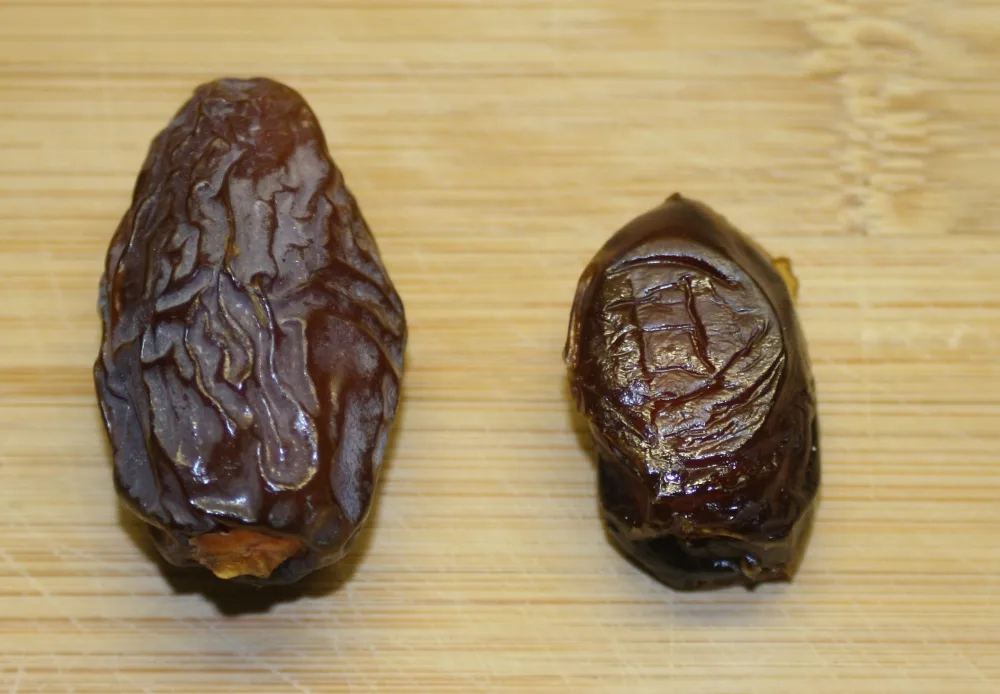
Not all fresh dates are the same. Some markets sell crunchy yellow khalal dates, firm and apple-like, while others sell soft brown rutab. Both are fresh, but they eat very differently: khalal is crisp and lightly astringent, rutab is soft and honeyed. When you ask for fresh dates, clarify which stage you want, because a buyer expecting melting rutab may be surprised by a crunchy khalal, and vice versa.
Why Local Indonesian Dates Are Different
Indonesia grows its own dates, but because of tropical humidity they are harvested fresh at the rutab or even khalal stage rather than dried on the tree. Local fresh dates, often from Barhi-derived KL-1 palms, appear in a short window around July to September and are usually sold close to the farm. They are a fascinating local story rather than a year-round supply, which is why imported and frozen rutab still anchor the market.
Planning Your Purchase
The simplest plan is this: for the freshest non-frozen rutab, buy in the August to October window; for any other time, choose quality frozen rutab thawed to order. Either way, confirm the seller keeps a proper cold chain, and store your dates cold the moment they arrive.
Frozen Does Not Mean Lower Quality
Many buyers hesitate over frozen rutab, assuming it is inferior to fresh. In fact, fast freezing at very low temperatures locks in texture and flavor at peak freshness and holds it until the fruit reaches your table. The key to quality is not frozen versus fresh, but whether the cold chain stayed unbroken. Properly handled frozen rutab can taste every bit as good as just-harvested fruit, which is why year-round availability need not mean a drop in pleasure.
Fresh-Date Harvest Calendar by Origin
Because fresh rutab follows the harvest, knowing each origin's harvest months helps you plan a purchase. The brief table below outlines the main harvest windows in the Northern Hemisphere plus tropical Indonesian dates; dates can shift a few weeks with weather and orchard elevation.
| Country / Origin | Main Harvest Months | Fresh-Rutab Note |
|---|---|---|
| Saudi Arabia & Gulf | August – October | Peak Barhi & Sukkary rutab; reaches Indonesia Aug–Oct. |
| Iran (Mazafati/Bam) | September – October | Rotab Bam picked late Aug–Sep; arrives around Sep–Oct. |
| Palestine (Medjool) | September – November | Medjool harvested soft and rutab-leaning. |
| Indonesia (local, KL-1) | July – September | Harvested at rutab ~150 days after pollination. |
The big pattern is clear: almost all fresh rutab peaks between late Northern-Hemisphere summer and early autumn, which for Indonesia means roughly August to October. Outside that window, frozen rutab keeps supply going, so you can enjoy wet dates all year.
Summary
Fresh rutab dates are in season roughly August to October in Indonesia, tracking the Gulf and Iranian harvests, while frozen rutab is available year-round thanks to cold-chain freezing near -18 degrees Celsius. Buy from a cold-storing seller, check for a clean sweet smell, and keep your dates chilled at home. In Jakarta, fresh dates are within reach in any season if you know where to look.