The Five Ripening Stages of the Date Fruit
The date ripens through five sequential phases known by their Arabic names: hababouk, kimri, khalal, rutab, and tamr. Understanding this order is the foundation of all date science — and the heart of why rutab (wet dates) differs from tamr (dried dates). Unlike most articles that only mention color, here we include moisture data and sugar profiles sourced from FAO and scientific reviews.
Date Ripening Stages Table
| Stage | Term | Color | Moisture | Sugar profile | Texture |
|---|---|---|---|---|---|
| 1 | Hababouk | Small green | Very high | Low | Inedible |
| 2 | Kimri | Green | Up to ~80% | Sucrose rising | Hard, unripe |
| 3 | Khalal | Yellow/red | ~50–85% | High sucrose, inversion begins | Crisp, edible |
| 4 | Rutab | Light brown | ~30–45% | Invert (glucose+fructose) rising | Soft, wet, melting |
| 5 | Tamr | Amber–dark brown | Below ~25% (down to ~10%) | Invert dominant | Dry, chewy, durable |
Key note: below about 25% moisture, dates become self-preserving. Rutab, at 30–45%, sits above that threshold and is therefore perishable — a fact that governs how it is stored and when it is in season.
Hababouk and Kimri: The Early Phases
Hababouk is the stage right after pollination, when the fruit is still tiny and green. Continuing to kimri, the fruit enlarges, stays green and hard, and is very high in water (near 80%). Reducing sugars start to rise here, but the fruit is still astringent and not yet edible.
Khalal: Physiologically Mature and Crisp
Khalal is an important turning point: the fruit reaches physiological maturity, turns bright yellow or red, and becomes crisp like an apple. Some cultures enjoy dates at this stage. Moisture begins to fall (a wide ~50–85% range depending on cultivar) as sucrose accumulates and slowly breaks down into invert sugars.
Rutab: The Wet Stage We Seek
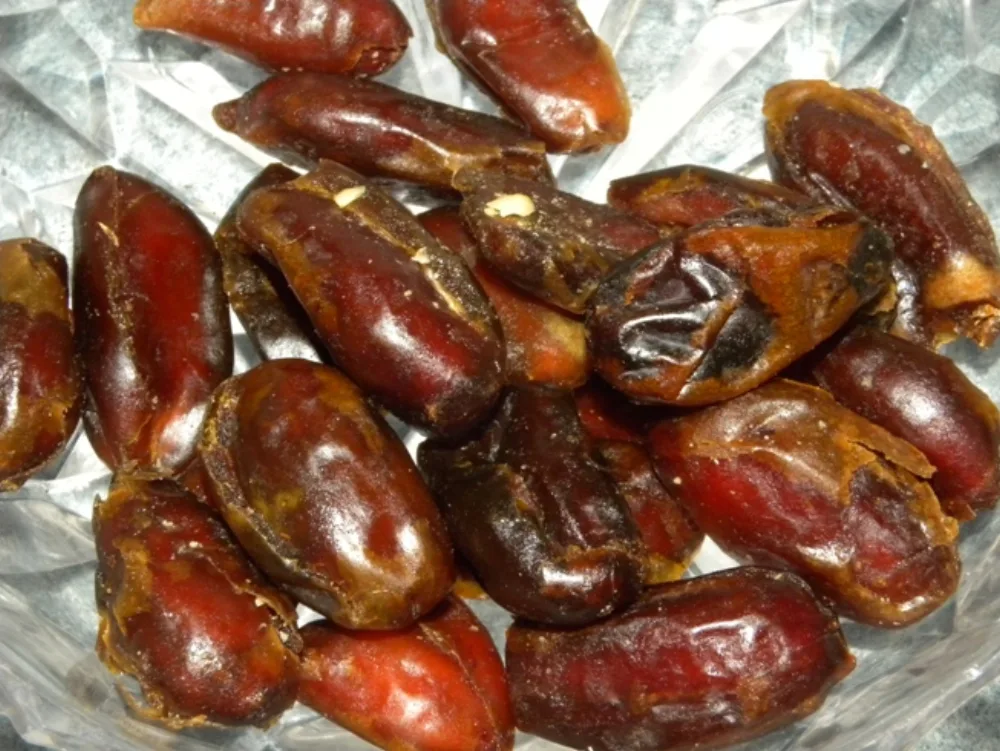
This is the star of this site. At rutab, the tip of the fruit begins to soften and brown, moisture drops to 30–45%, and the sugars shift further toward invert (glucose and fructose). The result is soft, melting flesh with honeyed sweetness. For tropical Indonesian dates, the rutab phase is generally reached around 150 days after pollination, per the Directorate of Horticulture — because high humidity prevents the fruit from drying to tamr on the tree.
Tamr: The Dry, Durable Stage
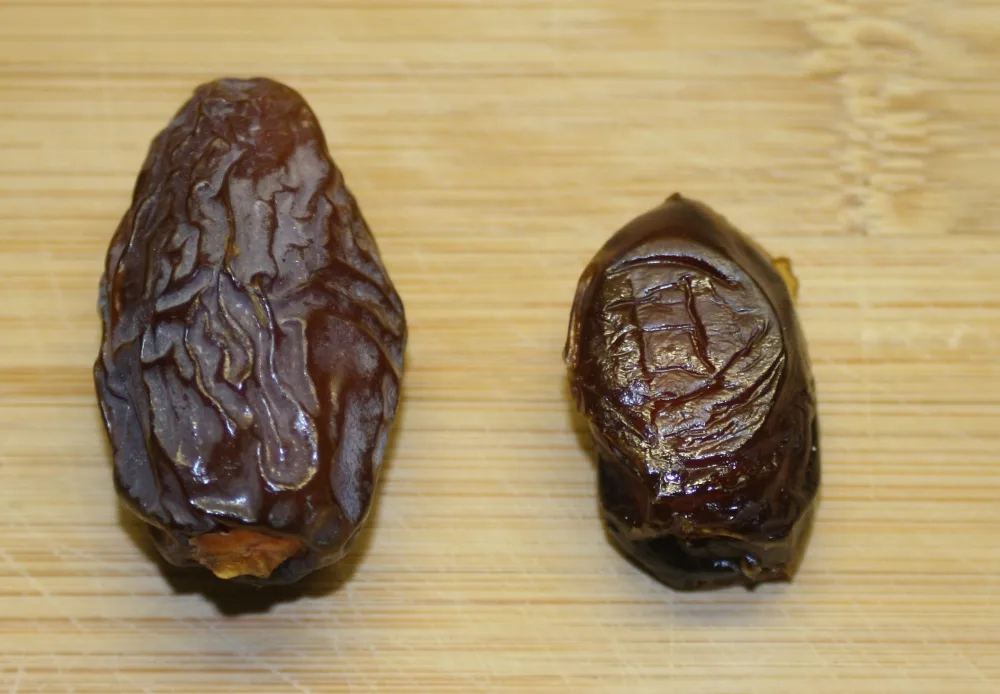
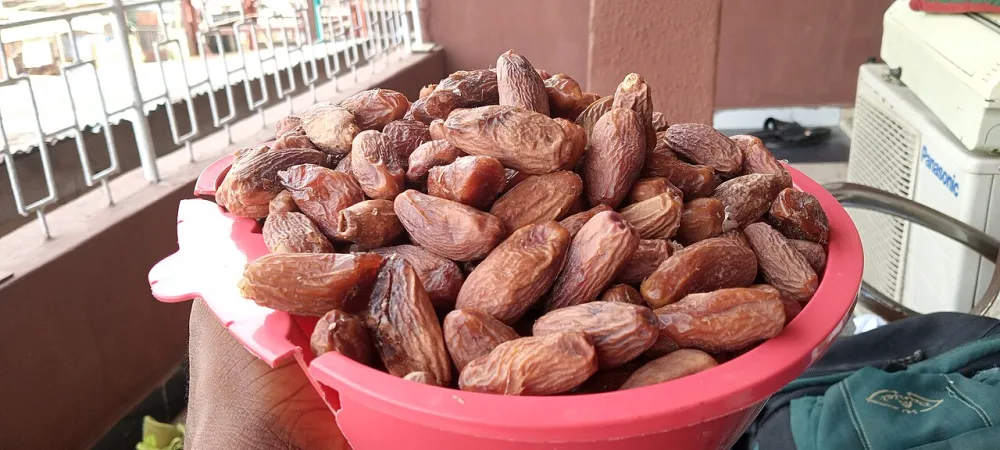
At tamr, the fruit is fully ripe, moisture falls below 25% down to about 10%, the color turns amber to dark brown, and the texture becomes chewy. Almost all sucrose has now converted to invert sugars. This is the most durable form of date and the most commonly exported because it keeps long without refrigeration.
A Brief Timeline (Approximate)
- Kimri — the longest phase, several months after pollination
- Khalal — physiological maturity, bright color
- Rutab — around ~150 days after pollination in a tropical climate
- Tamr — fully ripe, ready for long-term storage
Exact figures vary by cultivar, climate, and orchard practice, so we present them as estimates, not absolute benchmarks.
Why Color Alone Is Not Enough
Almost every article on date ripening only mentions color: green, yellow, brown, then black. But color is just a surface symptom. What truly changes is the moisture content and sugar composition inside the flesh. Two dates can look equally brown, yet one is still rutab (wet, 30–45% water) and the other is already tamr (dry, below 25%). That is why the data table above is far more informative than a list of colors — it explains texture, flavor, shelf life, and season all at once.
Barhi: A Date Eaten at Three Stages
The best example for understanding this whole journey is the Barhi date. Barhi is unique because it is commonly enjoyed at three different stages: at khalal it is yellow and crisp like an apple with a touch of astringency; at rutab it softens, browns, and tastes of honey; and at tamr it becomes a chewy golden dried date. One variety, three flavor experiences — Barhi is a living classroom for the concept of ripening stages.
From Orchard to Table: The Implications of Each Stage
The ripening stage also determines how dates are handled after harvest. Dates picked at rutab must be chilled or frozen quickly because they are perishable, while dates left to reach tamr can be stored and exported without refrigeration. This explains why fresh dates (rutab) are seasonal and logistically pricier, while dried dates are available year-round on store shelves.
A Note on Variation Between Cultivars
The moisture figures in the table are general ranges, not absolute values. Each cultivar has its own character: some varieties reach khalal at higher moisture, others dry toward tamr more quickly. Climate, humidity, soil type, and harvest practices all play a role. This is why scientific literature presents ranges, not a single fixed number. What is consistent is the direction of change: from a very wet early phase, through a gradual moisture decline, to a dry and durable tamr. Understanding this pattern matters more than memorizing one number, because the pattern holds universally across the date world.
Why This Understanding Matters
Knowing all five stages helps you choose dates by need: rutab for freshness and softness, tamr for shelf life. It also explains why fresh dates are seasonal and need a cold chain. The accompanying nutrition information is educational, not medical advice.