Why You Need This Glossary: Stage Is Not Variety
The most common confusion about dates comes from one mistake: mixing up the maturation stage with the variety name. Some popular articles, for instance, pair ruthob with ajwa as if they were the same kind. But ruthob/rutab is a stage (the wet date), while ajwa is a variety (a cultivar from Madinah). Even an ajwa date passes through the rutab stage before becoming tamr. This glossary sets it straight and serves as a hub linking to all our science articles.
Maturation Stage Terms (From Flower to Dry)
These five classic stages apply to every date variety, whatever its name.
| Term | Meaning & Traits |
|---|---|
| Hababouk | Tiny new fruitlet after pollination, about 1 gram, wrapped by the calyx; lasts 4 to 5 weeks. |
| Kimri | Enlarging green fruit; still astringent and inedible; the longest phase, 2 to 5 months. |
| Khalal (or bisr) | Maximum physiological size; yellow to red, apple-crisp, edible but not storable. |
| Rutab (ruthob, ruthab, rotab) | The third stage; soft, browning wet/fresh date, 30 to 45 percent moisture; lasts only 2 to 4 weeks. |
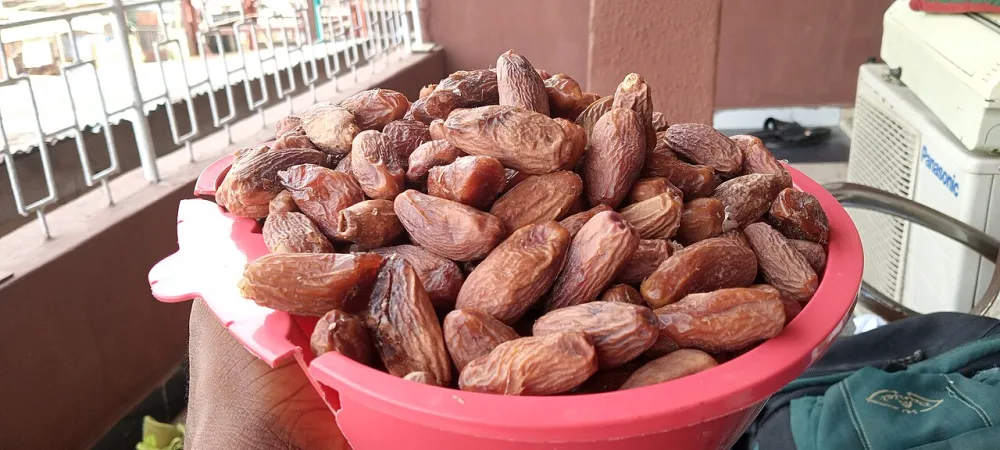
| Tamr (tamar) | Fully dried ripe date; moisture below ~25 percent, concentrated sugars, self-preserving. |
The quantitative detail of each stage, with FAO data, lives on our date maturation stages pillar.
Variety (Cultivar) Terms Often Confused With Stages
Unlike a stage, a variety is the name of a kind of date. Here are the ones most often seen in Indonesia.
| Variety | Origin & Brief Character |
|---|---|
| Ajwa | Madinah; black, soft, religiously iconic (sold as tamr). |
| Sukkary (Sukari) | Al Qassim, Saudi Arabia; golden, very sweet; sold both wet and dry. |
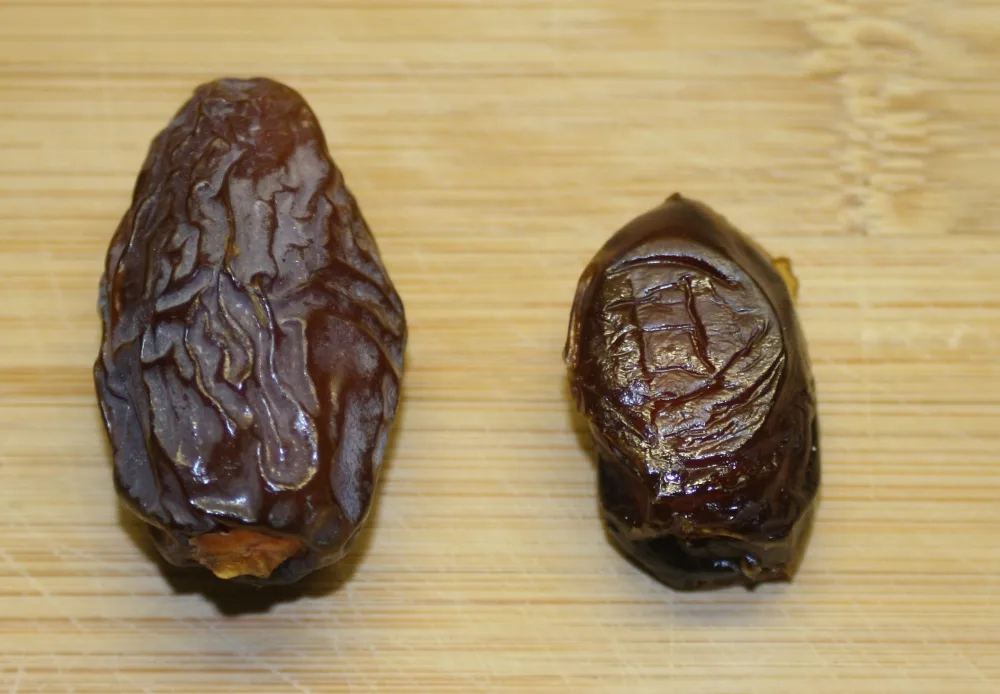
| Medjool | Moroccan in origin, now global; large, caramel; often sold at a soft ripeness. |
| Mazafati (Kimia/Bam) | Bam, Iran; dark, wet, high moisture; a true rutab, known as rotab. |
| Safawi | Madinah; black, soft, semi-rutab. |
| Mabroom | Madinah; long, semi-dry, chewy. |
| Anbara | Madinah; large, premium, thick-fleshed. |
| Sayer (Stamaran) | Iran; soft and syrupy, mid-moisture. |
| Barhi | Edible at all three stages (khalal, rutab, tamr); the best teaching example. |
| Deglet Noor | North Africa; semi-dry, translucent. |
| Zahedi | Iran; firm, dry, less sweet; the dry end of the spectrum. |
Confusing Spellings: All the Same Stage
One stage, many spellings. Rutab (Arabic), ruthob and ruthab (Indonesian transliterations), and rotab (Persian) all point to the same thing: the third-stage wet date. Do not mistake them for different varieties. Likewise khalal is sometimes written bisr, and tamr written tamar.
Science and Trade Terms Worth Knowing
- Moisture content — the percentage of water in the fruit; rutab 30 to 45 percent, tamr below ~25 percent.
- Water activity — a measure of free water available to microbes; it decides how easily a date ferments.
- Invert sugar — glucose and fructose from the breakdown of sucrose; rises with ripening.
- Cold chain — refrigerated storage (down to about -18 degrees Celsius) that keeps rutab fresh.
- Drupe — a single-seeded stone fruit; the botanical classification of a date.
- Pericarp — the three-layer fruit wall: exocarp, mesocarp, endocarp.
- FAO — the UN Food and Agriculture Organization; the reference for moisture and stage data.
How to Use This Glossary
Treat this page as a reference desk. If a term sparks your curiosity, dig deeper: maturation stages for the full taxonomy, moisture and sugar content for the chemistry, rutab in the Quran for the linguistic and scriptural angle, and our rotab bam page to see rutab in real form. Separating stage from variety is the first step to becoming a smart date buyer.
Religious and Linguistic Terms
Some date terms are rooted in the Arabic of the Quran and hadith. Rutaban janiyya (Surah Maryam 19:25) means fresh, freshly-picked dates, the only mention of a fruit in a miracle context. Tamr is the word that most often appears for dried dates across the narrations. Understanding these roots helps separate the scientific dimension from the religious one; we cover the full study in our article on rutab in the Quran.
Quality and Size Terms
In trade, dates are also grouped by quality and size. Terms like grade A, AA, or VIP mark a quality sort, while jumbo and super mark fruit size. It is important to note that a trade grade differs from a maturation stage; a jumbo grade-A Medjool still refers to variety and size, not a rutab or tamr position. Keep these three axes apart, namely stage, variety, and grade, so product descriptions never confuse you.
Common Mistakes About Date Terminology
To avoid joining the confusion, steer clear of these four mistakes that circulate online.
- Calling rutab a variety name, when it is a maturation stage.
- Equating ruthob with ajwa, when one is a stage and the other a variety.
- Treating rotab as a different date from rutab, when it is only a different spelling.
- Assuming young dates always equal rutab, when in market language young dates often mean the still-yellow, crunchy khalal stage.
By avoiding these four traps, you are already more accurate than most popular articles.
Why This Disambiguation Matters to Buyers
Knowing the terms is not just about being technically right; it protects your wallet. A seller who conflates stage with variety can misstate quality, for example selling yellow khalal as premium rutab, or the reverse. Once you know that rutab is the wet stage at 30 to 45 percent moisture, you can judge whether a product really is rutab, or just a soft variety labeled that way. This glossary is a simple shield of knowledge that lets you shop with open eyes.
Quick Table: Moisture & Sugar by Stage
So the stage terms do not stay mere words, pair them with numbers. The table below summarizes the moisture range and sugar profile of each stage based on FAO data (Chapter IX, post-harvest handling of dates) and reviews of date-fruit chemistry. Figures are ranges because they differ between varieties.
| Stage | Moisture | Dominant Sugar Profile | Texture |
|---|---|---|---|
| Kimri | ~80% | Sugars still low, high starch & tannin | Hard, astringent |
| Khalal | ~50–85% | Turning sweet, sucrose rising | Crisp |
| Rutab | ~30–45% | Sucrose inverts to glucose & fructose (invert sugar) | Soft, melting |
| Tamr | <25% (down to ~10%) | Concentrated invert sugar | Chewy to firm |
One threshold to remember: below about 25 percent moisture a date becomes self-preserving (tamr), because its free water is too low for microbial growth. Above that line, rutab is perishable and needs a cold chain. This single number explains why rutab is seasonal while tamr keeps for a year at room temperature.
Summary
Stages (hababouk, kimri, khalal, rutab, tamr) apply to all dates; varieties (ajwa, sukari, medjool, mazafati, and others) are the names of kinds. Ruthob, ruthab, rutab, and rotab are spellings of one and the same stage. Grasp this difference, and half the confusion about dates disappears.