When Does Fresh-Date Season Arrive?
One of the most frequent yet rarely well-answered questions: when is fresh-date season (rutab) available? The short answer: fresh non-frozen rutab generally arrives in the harvest window around August–October for Middle Eastern dates, while frozen rutab is available year-round. But the more useful answer is a fresh-date availability calendar by origin, because each region has its own harvest schedule.
Date Harvest Calendar by Origin
| Origin | Main varieties | Fresh rutab season | Frozen |
|---|---|---|---|
| Saudi Arabia (Madinah, Qassim) | Safawi, Ajwa, Sukkary, Anbara | August–October (Madinah starts earlier) | Year-round |
| Iran (Bam, Kerman) | Mazafati/Rotab Bam, Sayer | September–October | Year-round |
| Palestine / Jordan | Medjool | September–October | Year-round |
| Indonesia (Pasuruan, Aceh, Riau) | Barhi / KL-1 | July–September | Limited/local |
Note: harvest windows shift slightly each year with the weather. This calendar is a guide, not fixed dates.
Saudi Arabia: Madinah and Qassim
In Saudi Arabia, the date harvest starts earlier in Madinah (early dates can appear by mid-year) and continues in the Qassim region, the home of Sukkary. Peak fresh-rutab availability for export markets generally falls between August and October.
Iran: Mazafati from Bam
Mazafati (Rotab Bam) from Kerman province is harvested at peak rutab around late August to September, when the fruit softens and darkens. As a result, fresh rotab from Iran typically reaches Indonesia around September–October. This is the wettest date, so it always needs a cold chain.
Palestine and Jordan: Medjool
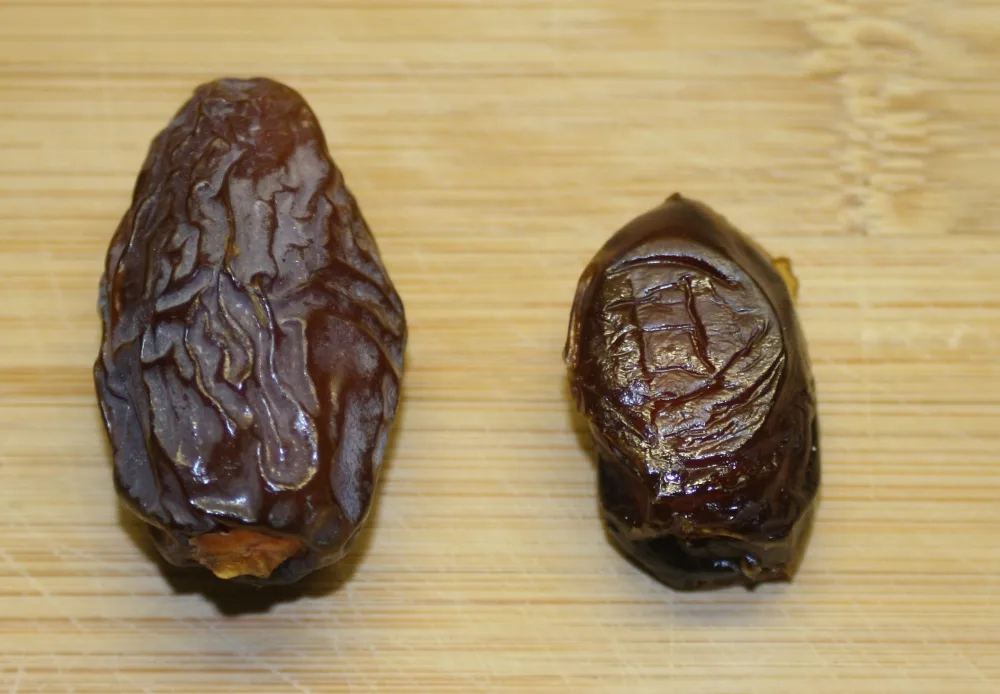
Medjool from the Jordan Valley is generally harvested in autumn, around September–October. Sold at a soft, rutab-leaning ripeness, Medjool is one of the most recognized fresh dates on the international market.
Indonesia: Tropical Dates at the Rutab Stage
Interestingly, Indonesia harvests its own dates at the rutab stage. High tropical humidity prevents the fruit from drying to tamr on the tree, so local dates are picked wet, generally around 150 days after pollination (per the Directorate of Horticulture). Cultivation centers include Pasuruan, Magetan, Aceh, and a research garden in Riau with the tropical cultivar KL-1 (a Barhi x Deglet Noor type). Local harvest tends to run around July–September. Note: this is educational context; our network imports, it does not sell local dates.
Why the Season Matters to Buyers
Understanding the season is not just knowledge but a real shopping tool. Buyers who know when fresh rutab arrives can plan purchases at peak quality, avoid overpaying for dwindling end-of-season stock, and prepare event needs on time. For food businesses and takjil providers, knowing the harvest calendar helps secure supply before demand surges. This is why many experienced buyers watch the switch between fresh and frozen labels in the market — it is a direct signal of where the season currently stands.
Fresh vs Frozen: Understanding Two Supply Lanes
- Fresh (non-frozen) — only in the harvest window; the liveliest texture, but the most perishable
- Frozen — available year-round; rutab is frozen to preserve texture, simply thaw before serving
Many buyers track the season because market listings switch between fresh labels in the harvest window and frozen off-season. The calendar above helps you plan purchases, including pre-orders before Ramadan.
Why Harvest Windows Can Shift
Date harvest dates are not fixed numbers. Each year, the harvest window can move earlier or later by a few weeks depending on that season's weather — temperature, rainfall, and wind patterns affect how fast the fruit ripens. In addition, each cultivar has its own rhythm: early varieties ripen first, later varieties follow. So the calendar above should be read as a general guide, not a guarantee of exact dates. For time-bound needs, such as stock before Ramadan, confirming current availability is far wiser than relying on rigid dates.
How to Track Fresh-Date Availability
There are several practical ways to track the rutab season:
- Watch market labels — listings switching from frozen to fresh signal the harvest window is opening
- Follow news from importers — they know when fresh-rutab container shipments arrive
- Note the yearly pattern — Middle Eastern rutab tends to arrive August–October, Iran September–October
- Plan a pre-order — fresh stock is limited and sells out fast at peak season
By tracking these signals, you can get fresh rutab at its best.
Planning Purchases Year-Round
The most convenient approach is to combine two lanes: enjoy fresh rutab when the season arrives for the best texture experience, then rely on frozen rutab off-season so you can eat it anytime. For large events or routine needs, communicate your plan early so stock can be prepared. This simple planning keeps you from running out when demand surges, especially before Ramadan and Eid.
Seasonal Fresh Rutab Pre-order for Jabodetabek
If you want fresh rutab or rotab when the season arrives, we take seasonal pre-orders for Jabodetabek — Jakarta, Depok, Tangerang, Bekasi, and Bogor — from our Cakung, East Jakarta warehouse. Imported stock is MUI halal-certified. To secure stock in the harvest window, contact WhatsApp +62 823-4350-8579. Off-season, a frozen version is available year-round.