Rotab Is the Persian Spelling of Rutab
Ever seen a pack labeled rotab and wondered if it is a different date? It is not. Rotab is simply the Persian (Iranian) spelling of the same word as Arabic rutab, which in Indonesia is also spelled ruthob or ruthab. All point to one thing: the third maturation stage of the date, the soft fresh or wet date, just before it dries into tamr.
Because Iran is one of the world's largest producers of wet dates, the Persian term rotab appears widely in the market. And when people say rotab bam, they mean one legendary variety: Mazafati from the city of Bam.
Rotab Bam: Mazafati from the City of Bam, Iran
The Mazafati variety goes by several names: Mazafati, Kimia, or simply Bam, after its growing region in southeastern Iran. Here is the profile that makes it special, drawn from Iranian date suppliers and trade sources such as DateFruit.ir and PersaTrading.
| Trait | Rotab Bam (Mazafati) |
|---|---|
| Origin | City of Bam and Kerman, southeastern Iran |
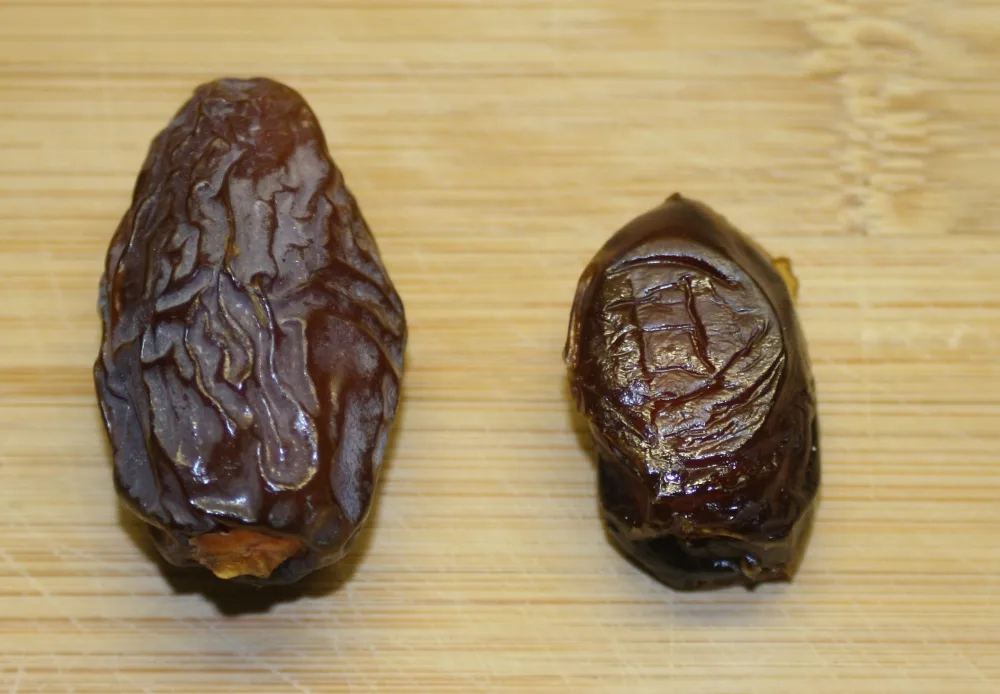
| Color | Very dark brown to almost black |
| Size | About 2.5 to 4.5 cm |
| Moisture | High, roughly 32 to 35 percent |
| Texture | Very soft, wet, melting, full-fleshed |
| Stage | Harvested and sold at the rutab stage |
Why Bam Is Called the Purest Rutab
Many dates are sold as tamr (dried). Mazafati Bam is different: it is harvested, frozen, and enjoyed exactly at the rutab stage, rarely left to dry. At 32 to 35 percent moisture, it sits comfortably within FAO's rutab range (30 to 45 percent). That is why we treat it as a living example for our science pages: if you want to see and taste what rutab is, Rotab Bam is the answer. Its dark melting flesh is wet mesocarp in its clearest form.
Rotab Bam on the Date Maturity Spectrum
Not all wet dates are equally wet. Placing Rotab Bam on a spectrum helps you understand its position.
- Rotab Bam (Mazafati) — the wettest end; a true rutab with the highest moisture.
- Sayer (Stamaran) dates from Iran — soft and syrupy, mid-moisture; a bridge between rutab and tamr.
- Medjool Palestine — large and caramel, sold at a soft rutab-leaning ripeness.
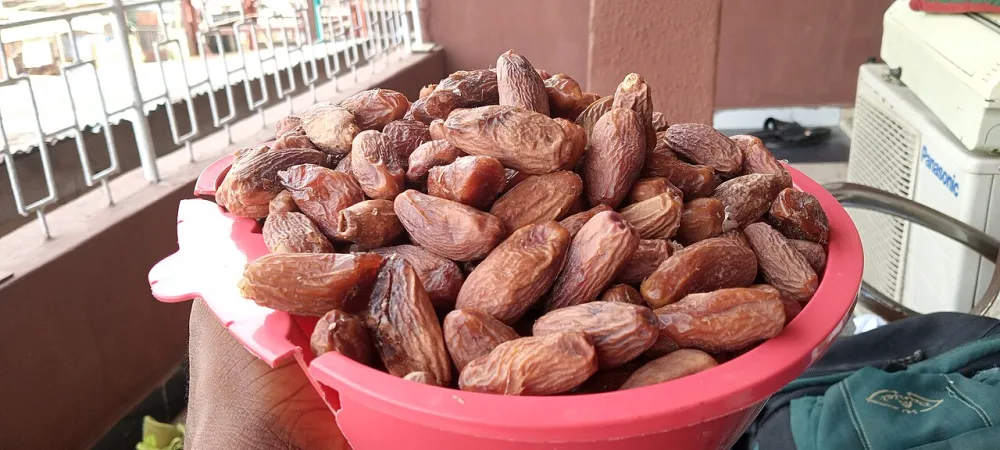
- Dry dates like Zahedi — the dry end of the spectrum, firm and long-keeping.
This spectrum, from wet to dry, is really the story of date maturation stages that we cover on this site's main pillar.
How to Store and Enjoy Rotab Bam
Because its moisture is high, Rotab Bam is perishable and demands cold temperatures, just like any rutab. Keep it airtight in the refrigerator for a few weeks, or freeze it for longer storage and thaw it slowly in the chiller. The science, from water activity to the cold chain, is laid out in our article on the moisture and sugar content of rutab dates. Enjoy Rotab Bam straight as a fast-breaking snack, or pair it with tea and coffee; its deep caramel flavor marries beautifully with warm drinks.
Rotab Bam in the Indonesian Market
Demand for Iranian wet dates in Indonesia is real and steady. On marketplaces, listings for kurma bam stay active year-round, many sold frozen so they are available outside the harvest season. Fresh non-frozen stock generally flows during the import window around August to October, while frozen stock keeps it available all year. To understand this seasonality more deeply, see our article on date harvest season and the fresh-date availability calendar.
If you want to taste rutab in its purest, curated form, Rotab Bam is our first choice. Contact our team via WhatsApp for seasonal availability across Jabodetabek. We deliberately frame this page as a variety and science explainer, not a price list, so that you buy with understanding rather than chasing a promo.
Kimia, Mazafati, Bam: Three Names for One Date
Naming confusion is common in the market. Mazafati is the variety name, Bam is the city in Kerman Province that grows the best of it, and Kimia is a trade name popular in some markets. All three point to the same date. So if you find a label reading Kimia dates, Bam dates, or Mazafati, know that these are essentially the same rotab, with only slight differences in grade, size, and moisture between suppliers. Because they are sold at the rutab stage, all of them demand the same cold handling.
Why Rotab Bam Is So Dark
The very dark, almost black color of Rotab Bam is not a sign of scorching or spoilage; it is a natural result of ripening. As a date moves from khalal to rutab, phenolic compounds and sugars undergo browning reactions while the bright khalal colors fade. In Mazafati this process runs intensely, producing the deep dark hue that defines it. In fact, an even dark color, glossy skin, and moist flesh are marks of quality rotab, not defects.
Rotab Bam for Lovers of Wet Dates
For many people, Rotab Bam is the first doorway into the world of wet dates because its sweetness is gentle and its texture is almost jam-like. It suits breaking a fast, hosting guests, or simply an afternoon snack. Because its moisture is high, one or two pieces already satisfy. To compare, set Rotab Bam beside the more syrupy Sayer (Stamaran) or the more caramel Medjool Palestine; a side-by-side tasting is the best way to understand the moisture spectrum of dates.
A Conservative Note on Rotab Bam Nutrition
As a wet date, Rotab Bam provides easily digested natural sugars (glucose and fructose), fiber, and minerals such as potassium. Because its moisture is higher, its energy density per gram tends to be lower than that of dried dates. We frame this carefully: dates support energy and fiber intake, not a cure for any disease. For those watching sugar intake, sensible portions still matter. This information is educational and does not replace advice from a health professional.
Rotab Bam vs Dried Dates: A Data Comparison
What makes Rotab Bam feel different from an ordinary dried date? The answer lies in the numbers. The table sets rotab (a wet date) against tamr (a dried date) on the parameters that most shape flavor and shelf life, drawing on FAO data and reviews of date-fruit chemistry. Figures are ranges.
| Parameter | Rotab Bam (rutab) | Dried Date (tamr) |
|---|---|---|
| Moisture | ~32–35% | <25% (often 10–20%) |
| Texture | Melting, moist | Chewy to firm |
| Sugar profile | Glucose & fructose (invert) dominant | Concentrated invert sugar |
| Room-temp shelf life | Short; needs a cold chain | Keeps for months |
| Energy density per gram | Tends to be lower | Higher (drier) |
This single moisture difference explains almost everything: why Rotab Bam feels melting yet spoils fast at room temperature, and why a dried date keeps for so long. That is exactly why we always serve Rotab Bam chilled or frozen, as explained in the storage section above. Understanding this one number makes you sharper at reading labels and judging freshness in hand.
Summary
Rotab is the Persian spelling of rutab, and Rotab Bam is Mazafati from the city of Bam, a wet date of 32 to 35 percent moisture harvested precisely at the rutab stage. Dark, melting, and richly caramel, it is the purest example of a fresh date and a perfect bridge between maturation science and your afternoon cup of tea.