What Is Rutab?
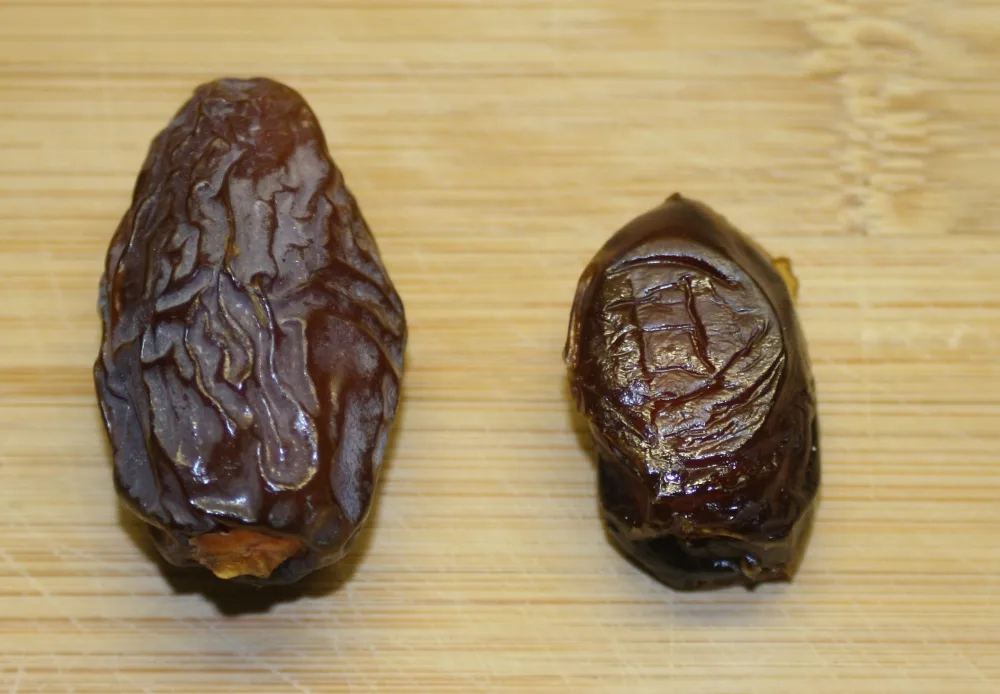
Rutab is an Arabic word meaning fresh and soft, and it names the third of the four mature stages of a date. After the crisp yellow khalal stage and before the dried tamr stage, a date becomes rutab: soft, moist, custard-like, and honey-sweet, with a thin skin that peels away easily. Produce authorities such as Specialty Produce and Coachella's Best Dates describe rutab as the stage where the tip softens and the bright khalal color fades to brown.
If you have searched for rutab dates, wet dates, or fresh dates and felt unsure whether they are the same, this guide is for you. Spoiler: they overlap heavily, but the words carry different shades of meaning.
Rutab, Wet Dates, Fresh Dates: Are They the Same?
These three terms circle the same fruit, yet each comes from a different tradition.
| Term | Origin | What It Means |
|---|---|---|
| Rutab | Arabic (technical) | The precise third maturation stage; the most accurate term for a soft, high-moisture date. |
| Wet dates | North American (colloquial) | Soft, juicy dates at the rutab stage. Note: occasionally used for dried dates that have been rehydrated, so context matters. |
| Fresh dates | Generic English | Dates eaten fresh rather than dried; usually rutab, sometimes the crunchy khalal stage too. |
The cleanest way to say it: all rutab dates are fresh wet dates, but not every product labeled wet has been naturally fresh. When you want precision, rutab is the word.
How Rutab Differs From Dried Dates (Tamr)
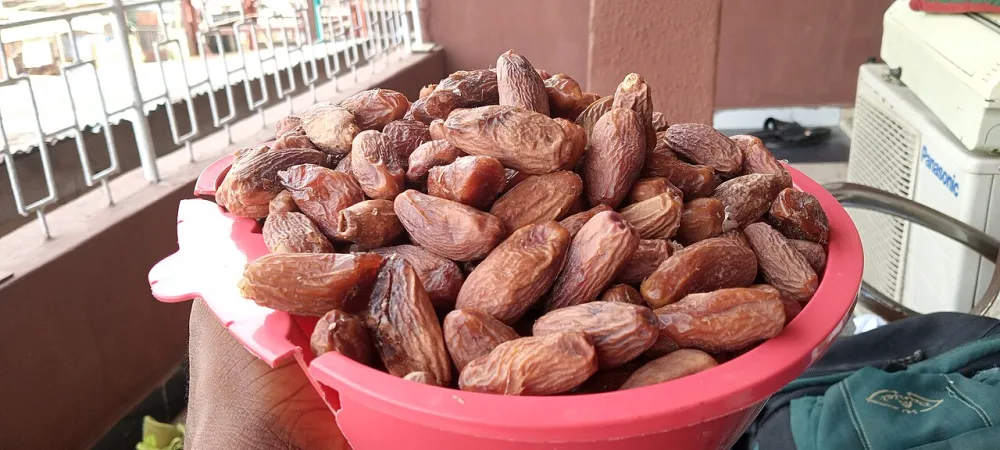
The gap between fresh and dried comes down to water. According to the FAO, rutab holds about 30 to 45 percent moisture, while tamr (dried dates) falls below roughly 25 percent. That single difference drives everything: rutab is softer, milder, and more perishable, while tamr is chewier, sweeter by concentration, and shelf-stable. We unpack the numbers, including the sucrose-to-invert-sugar shift, in our article on the moisture and sugar content of rutab dates.
- Texture — rutab melts; tamr chews.
- Sweetness — rutab is honeyed and light; tamr is dense and intense.
- Keeping — rutab needs cold storage; tamr keeps at room temperature.
Rutab in the Quran
Rutab carries a meaning that goes beyond food. It is the only fruit named in the Quran in a miracle context: in Surah Maryam (19:25), Maryam is told to shake the palm trunk so that rutaban janiyya, fresh freshly-picked ripe dates, fall to her after childbirth. For the word study and respectful sourcing, see our article on rutab in the Quran. We keep this section brief and reverent here, and direct readers to that dedicated piece.
Buying Fresh (Rutab) Dates in Jakarta and Indonesia
For expats, embassies, and HoReCa buyers in Jabodetabek, fresh dates can be hard to source in English. Here is the practical picture. Naturally fresh, non-frozen rutab tends to arrive during the import window of roughly August to October, tracking the Gulf and Iranian harvests. Outside that window, quality rutab is sold frozen and thawed to order, so you can enjoy it year-round. Popular choices include our Rotab Bam (Mazafati) for the wettest, darkest rutab, Medjool Palestine for large caramel fruit, and Sukkary for a golden, very sweet option. All are halal and priced in IDR.
If you would like seasonal availability and delivery across Jakarta and Jabodetabek, our team is reachable on WhatsApp. We teach first and sell quietly: this page exists to explain what rutab is, with a single soft invitation to try it.
How to Store Rutab at Home
Because rutab is high in moisture, treat it like fresh produce. Keep it airtight in the refrigerator for a few weeks, or freeze it for longer and thaw slowly in the chiller to restore texture. Left at room temperature, especially in tropical heat, rutab can ferment and sour. The full food-science reasoning is in our moisture and storage article.
Why the Three Terms Get Confused
The confusion is understandable. Rutab is a technical Arabic word that traveled into food writing, wet dates is a North American retail label, and fresh dates is a loose everyday phrase. None of them is wrong, but they sit at different levels of precision. Marketers also blur the lines: a pack labeled wet may contain genuine rutab, or it may contain dried dates softened with steam or syrup. Knowing the underlying stage, rutab, lets you read past the label and ask the only question that matters: was this date sold soft and fresh at its third maturation stage?
Which Dates Are Sold as Rutab?
Several famous varieties reach you at the rutab stage. Mazafati (Bam) from Iran, which we feature as Rotab Bam, is the textbook wettest rutab. Barhi is eaten fresh as soft rutab as well as crunchy khalal. Sukkary and Medjool are often sold at a soft, rutab-leaning ripeness. Recognizing that any variety can be a rutab, if harvested and kept at that stage, is the key insight that separates stage from cultivar.
Is Rutab Healthy? A Conservative View
Fresh rutab dates supply easily digested natural sugars, fiber, potassium, and B-vitamins, making them a quick natural energy source. Because rutab is wetter than dried tamr, it is somewhat lower in energy density per gram and higher in water. We keep health framing conservative: dates support energy and fiber intake; they are not a cure for any disease. Anyone managing blood sugar should still enjoy them in sensible portions.
A Quick Word Study: Rutaban Janiyyan
The key phrase in Surah Maryam 19:25 is rutaban janiyyan (رُطَبًا جَنِيًّا). The word rutaban shares the same root as rutab, pointing to dates at the soft wet stage, while janiyyan means freshly picked or newly ripened. So what was provided to Maryam was not dried dates but fresh ones just fallen from the branch, exactly the rutab stage we describe. This emphasis on freshness is what commentators often highlight; word-by-word references can be checked on Quran sites such as quran.com and qurano.com, while the tafsir is summarized in our dedicated article on rutab in the Quran. We present this respectfully and do not interpret beyond the sources.
Summary
Rutab is the Arabic term for the soft, fresh, third-stage date, the same fruit English speakers call wet or fresh dates. It is defined by its 30 to 45 percent moisture, its melting texture, and its need for cold storage, and it carries unique standing as the date named in Surah Maryam. In Jakarta, you can find it fresh in season and frozen year-round.